Key takeaways
- Insulation slows heat, but it does not stop moving air.
- The biggest leaks are in the attic floor, the rim joist and the ducts.
- Seal first, insulate second, then test.
- A tighter house needs good ventilation and safe combustion appliances.
Insulation and air are different problems
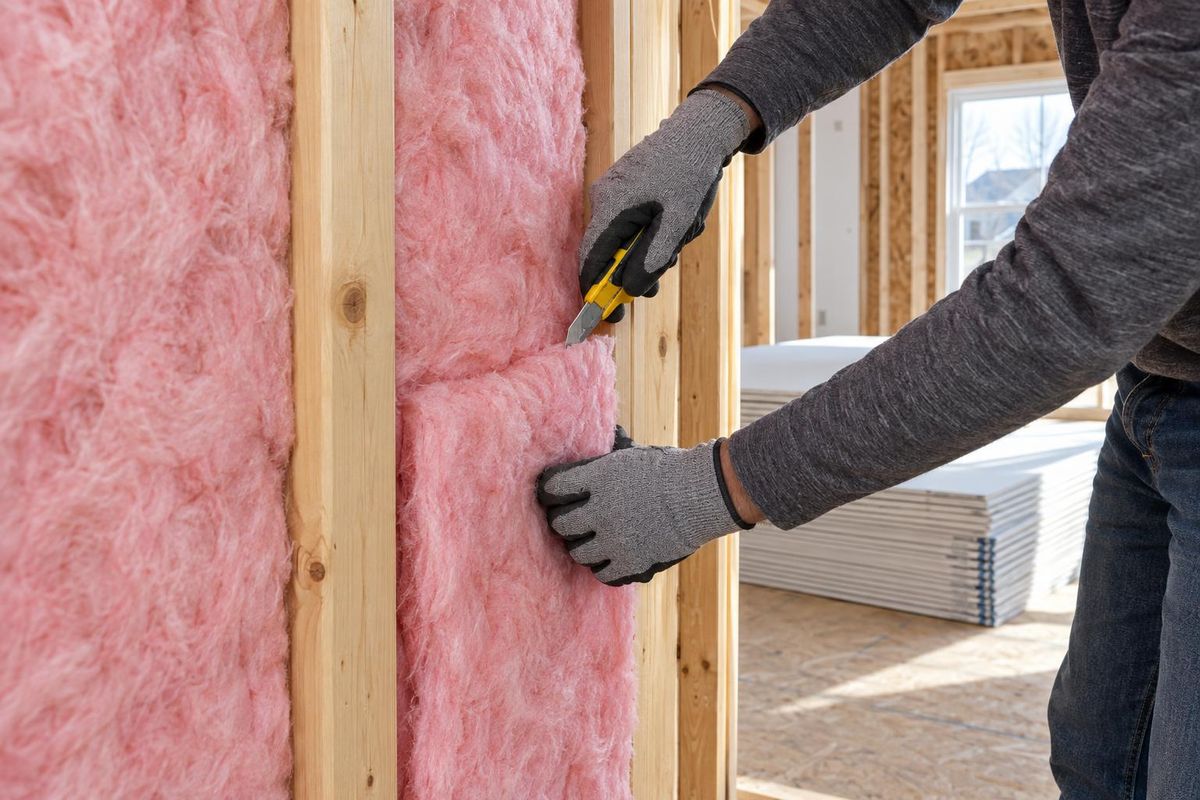
Insulation slows heat flow. Air sealing stops the movement of air. Air carries heat, humidity, dust and odors, and it can bypass insulation through gaps. A house with great insulation and big leaks still feels drafty.
That is why insulation contractors begin with air sealing.
Where the leaks hide
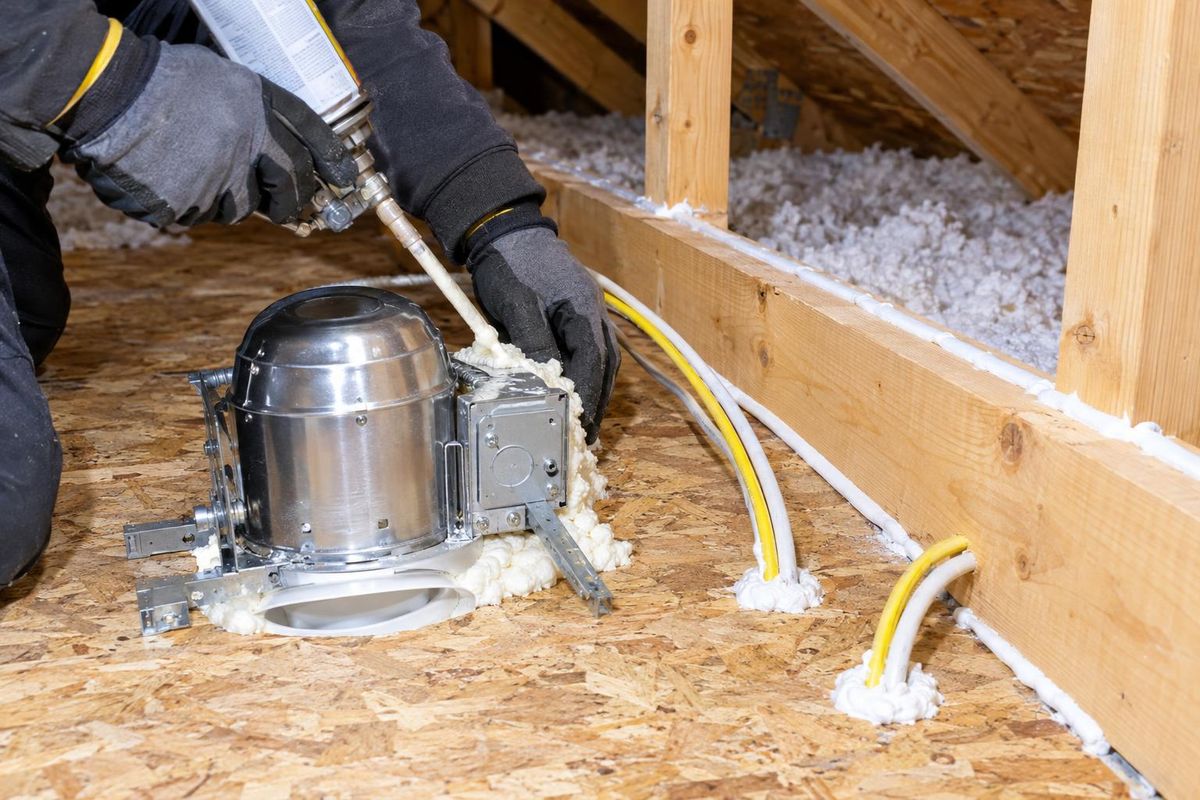
Attic floor leaks include top plates, wire holes, recessed lights, plumbing chases, chimney chases and the attic hatch. Lower in the house, rim joists, ducts, window and door frames and utility penetrations leak.
Many leaks are hidden under existing insulation or behind finished surfaces.
How leaks are found and sealed
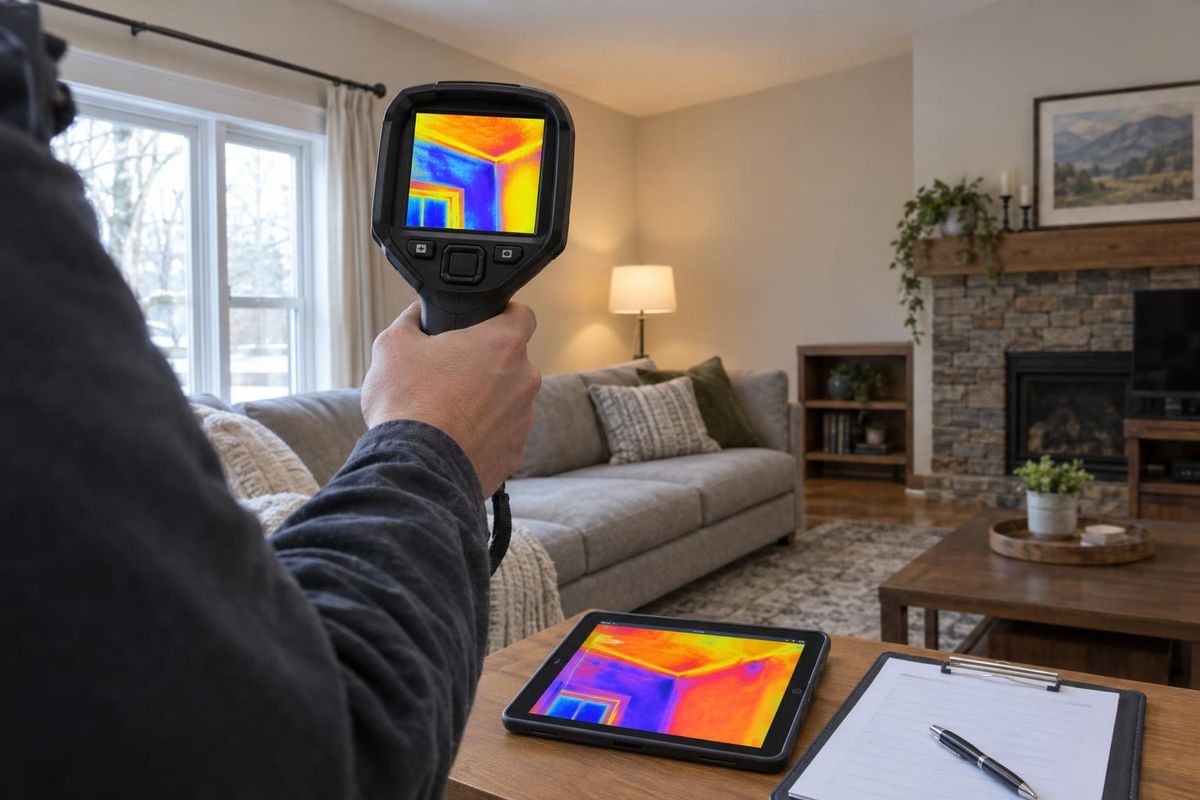
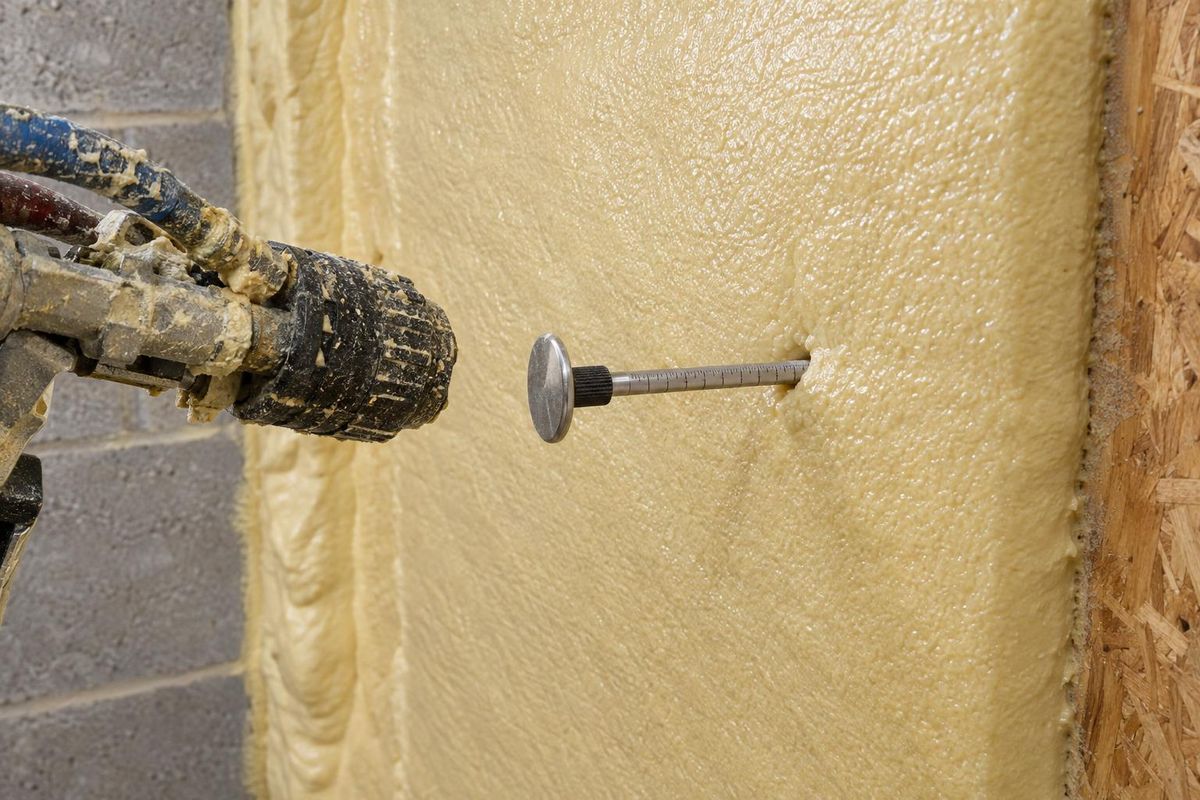
A blower door test depressurizes the house so leaks can be felt or traced. Technicians then seal gaps with foam, caulk, tape and covers rated for the location. Gaps near flues and recessed lights are sealed with fire-safe materials.
A repeat test shows how much the house improved.
Keep the house healthy
A tighter house needs fresh air. We check ventilation, bath fans and the combustion safety of gas appliances before and after sealing. Safe sealing is part of the job.
If your house has gas appliances or a fireplace, mention it at the start.
Quick answers
Will sealing make my house stuffy?
Not if ventilation is right. We check fans and combustion safety as part of the job.
Do I need a blower door test?
It is the clearest way to find and measure leaks, but not required for every job.
What is the first area to seal?
The attic floor, because warm air rising through it drives much of the leakage.