Key takeaways
- Every type works when it is installed well and fails when it is not.
- Spray foam seals air and insulates in one step. Others need separate air sealing.
- Loose-fill suits attics and closed walls. Batts suit open framing.
- Rigid foam and mineral wool solve specific moisture, fire and sound problems.
Batts and rolls
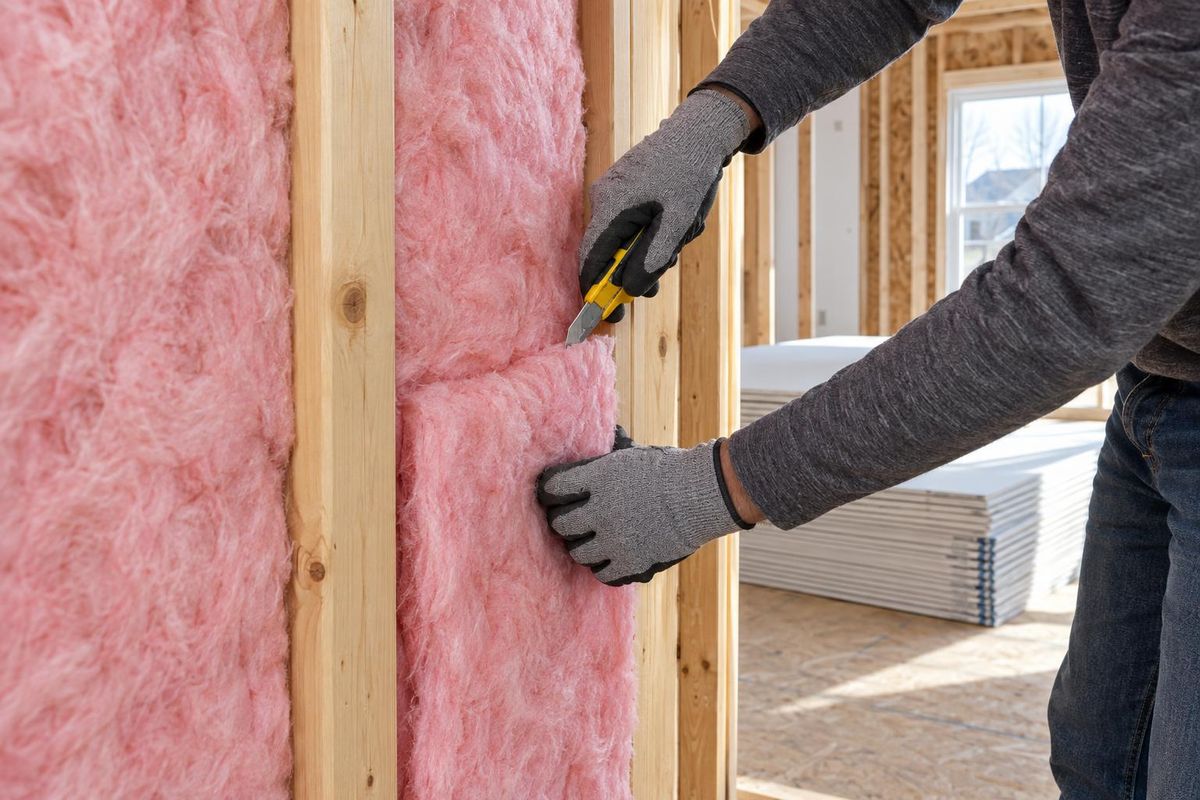
Fiberglass and mineral wool batts are the most familiar insulation. They fit between studs, joists and rafters, and they are easy to install in open framing. Their weakness is gaps and compression: a batt that is cut short or crammed in loses a lot of performance.
They work well when cut cleanly and fitted snugly, and they are often paired with air sealing.
Blown-in fiberglass and cellulose
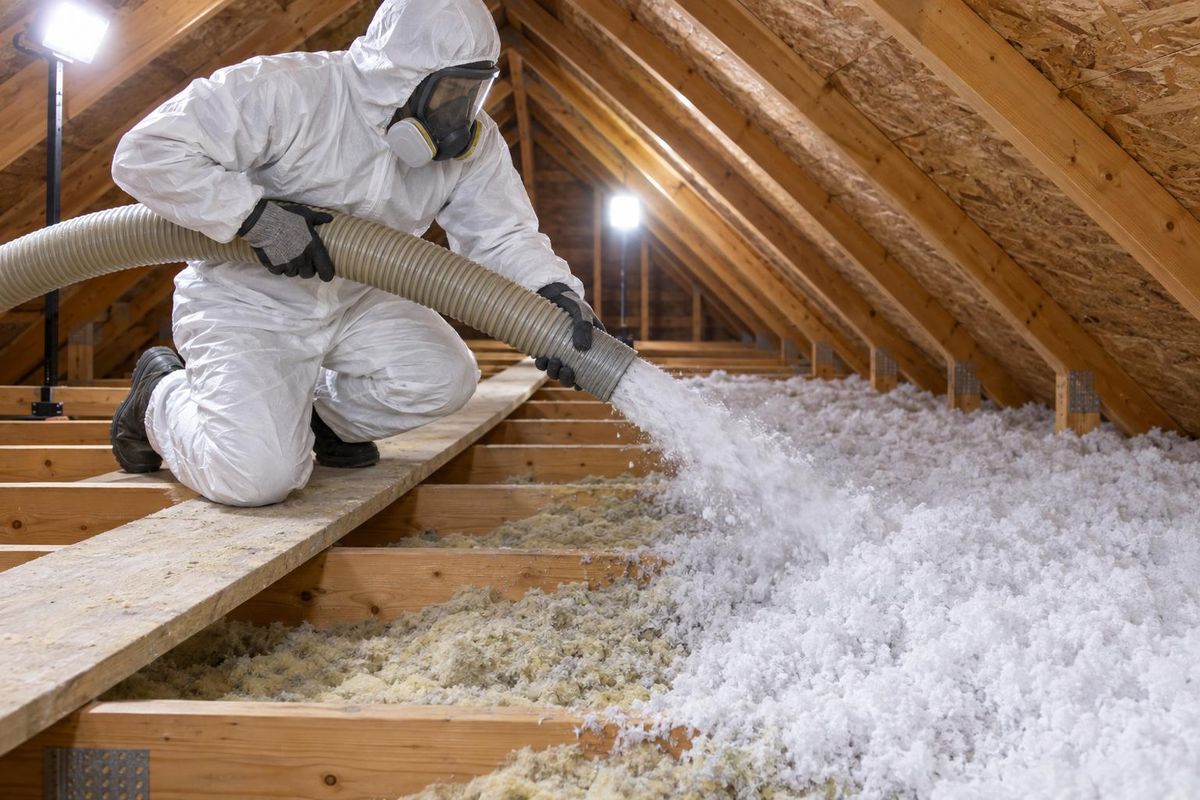
Loose-fill insulation is blown to a uniform depth, flows around obstacles and fills corners. It is the usual choice for attics. Dense-packed, it also fills finished walls through small holes.
Cellulose is made from recycled paper with fire retardants. Fiberglass is lighter and does not absorb as much moisture. Both work well.
Spray foam
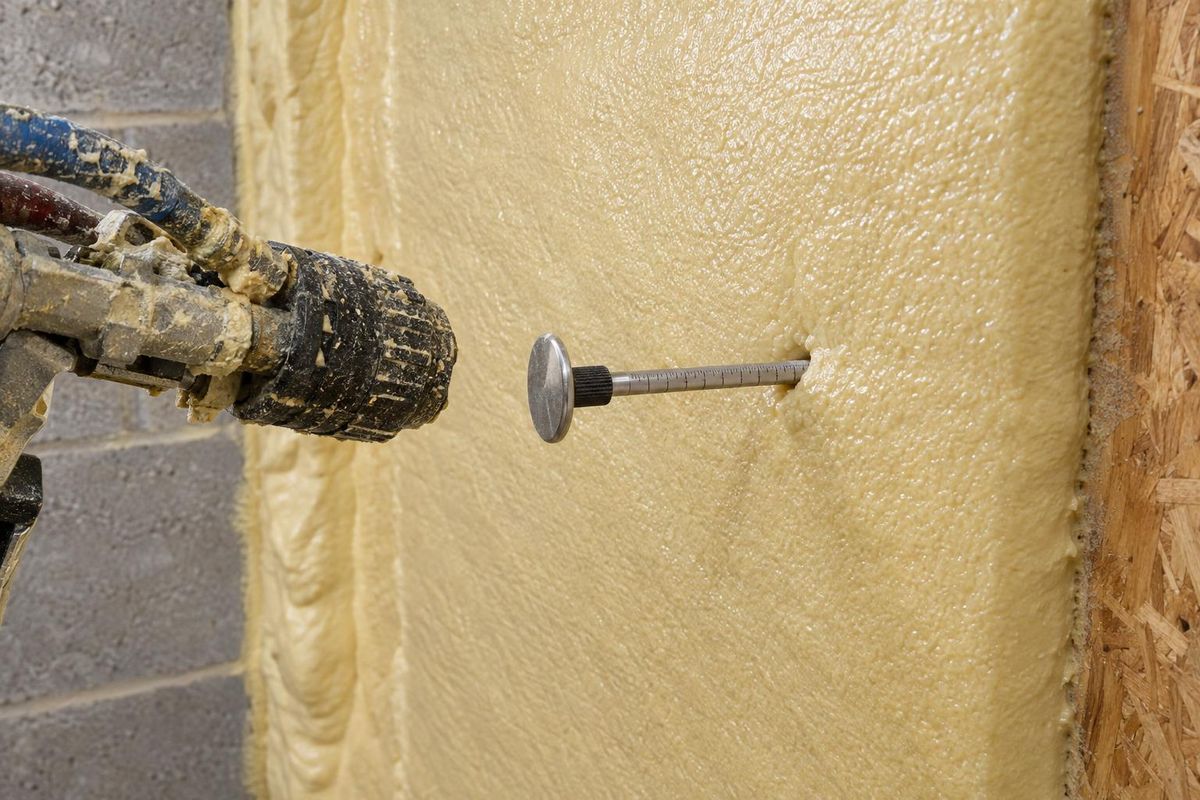
Spray foam is applied as a liquid and expands to fill the cavity. Open-cell is soft and light. Closed-cell is dense and adds moisture resistance. Both create an air barrier, which is why they are popular for roof decks, rim joists and crawl space walls.
Foam is more expensive to install than fiberglass, so it is used where its air sealing and thin profile matter most.
Rigid foam and mineral wool
Rigid foam board is used on basement walls, under siding and around rim joists. Mineral wool batts are dense, fire-resistant and good at blocking sound, which makes them popular in shared walls and theaters.
The right choice depends on the space, the moisture, the fire code and the goal.
Quick answers
Which insulation works for an attic?
Blown-in loose-fill is the usual choice, with air sealing first. Spray foam on the roof deck is another option.
Is spray foam always better?
No. It is better where air sealing and thin profile matter, and not necessary everywhere.
Can I mix types in one house?
Yes. Many houses use foam at the rim joist and roof, blown-in in the attic and batts in the walls.